




Como muchos de ustedes saben, cuando se trata de drenaje, se presta mucha atención al plástico. El tamaño, la resistencia, la flexibilidad... suelen ser las características que se discuten en la obra. Sin embargo, lo que también importa es lo que ocurre en el interior de la tubería, donde el flujo viene determinado por unas sencillas reglas que pueden decidir el éxito o el fracaso de un proyecto.
Tanto si está drenando una subdivisión, controlando la escorrentía en un aparcamiento comercial, ejecutando una línea principal para la escorrentía agrícola o sustituyendo una infraestructura municipal, comprender los conceptos básicos del caudal puede ayudarle a elegir la tubería adecuada y a mantener su sistema funcionando como debería.
Caudal 101: Conceptos básicos del movimiento del agua por las tuberías
El agua se mueve como siempre lo ha hecho, cuesta abajo y hacia el camino de menor resistencia. En los sistemas de drenaje por gravedad, la clave está en diseñar un camino que el agua quiera seguir. Eso significa prestar mucha atención a la pendiente, el diámetro y la fricción interna.
La mayoría de los sistemas de drenaje no están presurizados como las tuberías principales de agua de la ciudad. En su lugar, utilizan un flujo de canal abierto, lo que significa que la tubería solo se llena parcialmente y se basa en la gravedad para transportar el agua de un extremo al otro. En el flujo de canal abierto, la suavidad de su interior y la pendiente de su inclinación afectan al movimiento del agua.
Las tuberías lisas, las pendientes más pronunciadas y los diámetros más anchos ayudan a que el agua fluya más rápido. Pero si se exagera, pueden surgir problemas, como la erosión en la salida o costos innecesarios por una excavación excesiva. Ahí es donde comprender las cifras que hay detrás del flujo puede darte una ventaja.
CONOZCA LA “n” DE MANNING: EL COEFICIENTE DE SUAVIDAD
La ecuación de Manning es la fórmula que utilizan los ingenieros para calcular el caudal en sistemas de canal abierto. Tiene el siguiente aspecto:
Q = (1,486/n) x A x R^⅔ x S^½
No es necesario memorizarlo, pero muchos dirían que hay un dato más importante que el resto: la “n” de Manning, el coeficiente de rugosidad. En términos sencillos, indica la suavidad del interior de la tubería. Cuanto menor sea el número, más suave será el flujo.
A continuación, se muestra un resumen de cómo se comparan los diferentes materiales:
- Tubo de hormigón: n ≈ 0,013
- Tubo de plástico de pared lisa: n ≈ 0,012
- Tubo corrugado de pared simple: n ≈ 0,022
Como era de esperarse, una tubería de doble pared con una pared interior lisa transporta el agua más rápido y de manera más eficiente que una tubería de pared simple con corrugaciones en su interior. Una pequeña diferencia en “n” puede suponer una gran diferencia en el rendimiento real, especialmente en tramos largos o sistemas que funcionan cerca de su capacidad máxima. Todo se reduce a una cuestión matemática: las tuberías de plástico de pared lisa superan al concreto.

Por qué es importante el diseño de las tuberías: El flujo en acción
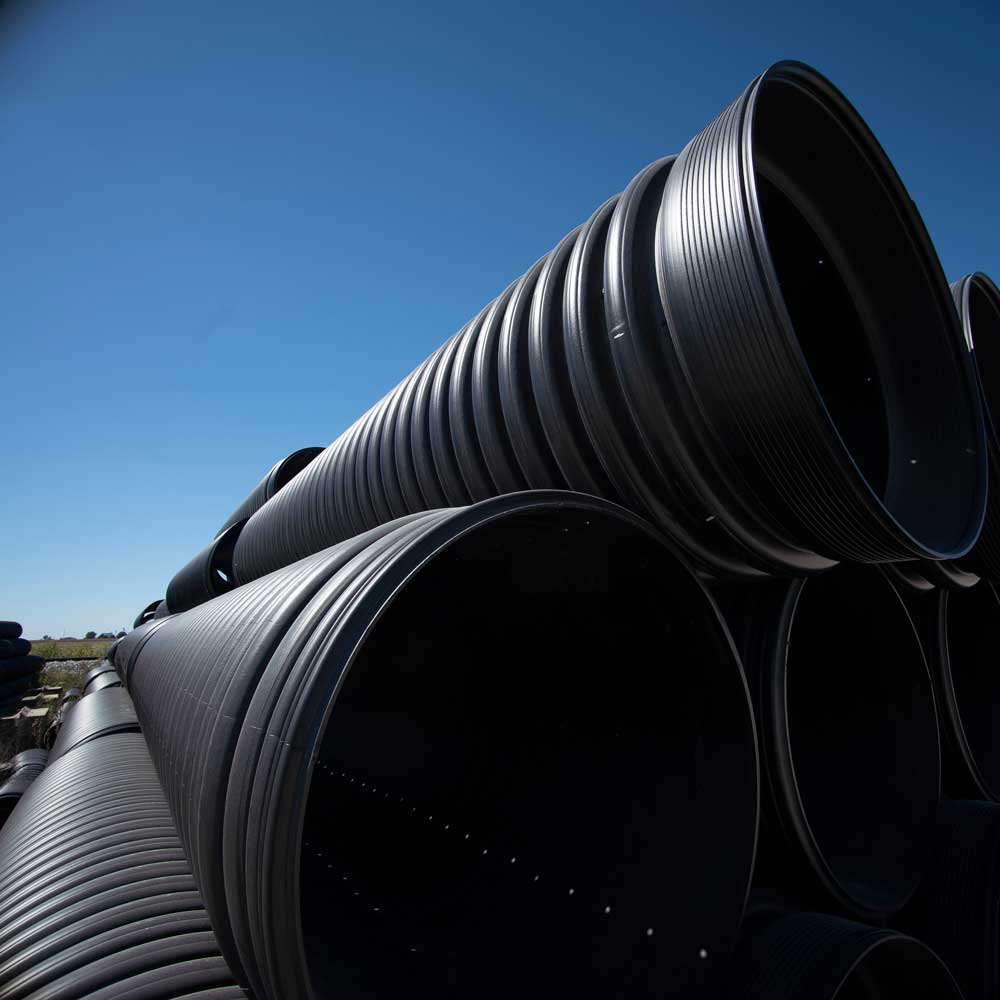
SmoothCorr (HDPE)
Tubería fabricada según ese concepto. Combina la resistencia y flexibilidad de una pared exterior corrugada con una superficie interior lisa que favorece un flujo más rápido. Es ideal para la mayoría de instalaciones de drenaje de doble pared, ya que ofrece la durabilidad que necesita sin sacrificar el rendimiento.
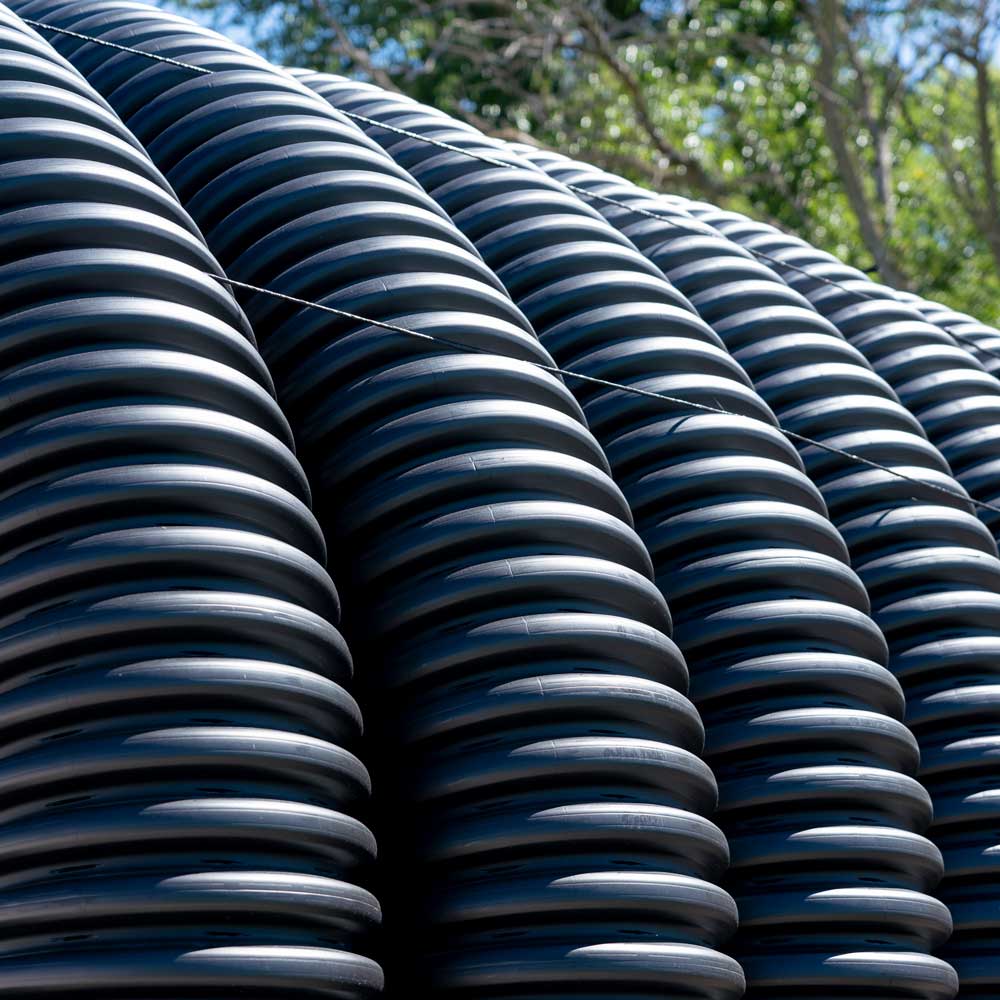
FlexCorr (HDPE)
Diseñado para adaptarse. Su diseño de doble pared altamente flexible lo hace ideal para trabajos en terrenos difíciles, contornos estrechos o áreas donde las tuberías rígidas simplemente no se pueden instalar correctamente. El FlexCorr se puede instalar con un arado de drenaje, lo que agiliza la instalación y reduce la necesidad de dar una forma precisa a la zanja, al tiempo que mantiene la resistencia necesaria para un drenaje confiable.
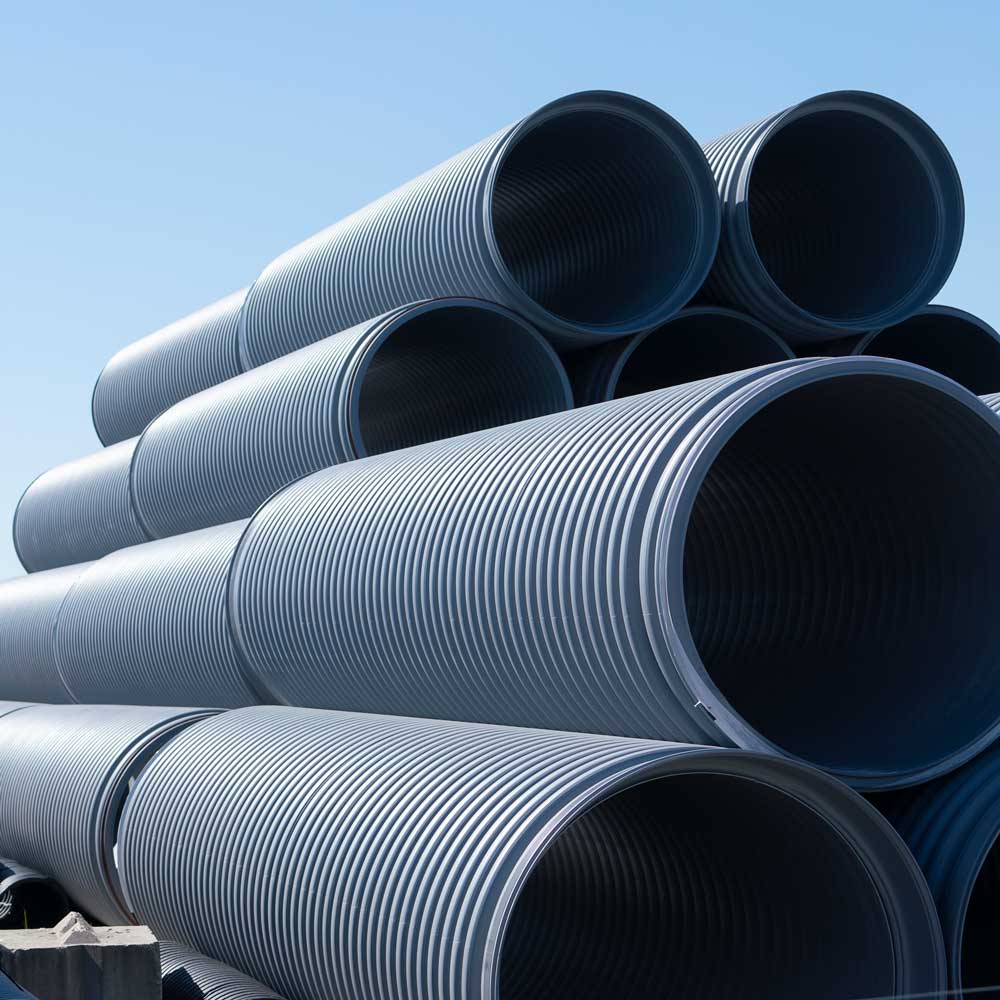
ProCorr (HDPP)
La solución resistente de Fratco para condiciones difíciles. Su construcción de polipropileno de alta densidad resiste la corrosión química y soporta suelos y fertilizantes agresivos. Con un diseño rígido de doble pared, ProCorr mantiene una capacidad de flujo excepcional al tiempo que ofrece la resistencia necesaria para aplicaciones de carga pesada. Es ideal para proyectos comerciales, municipales o agrícolas a gran escala en los que el rendimiento y la fiabilidad a largo plazo son imprescindibles.
Cada tubería aporta una ventaja diferente al trabajo, aunque todas las tuberías de doble pared ofrecen una gran eficacia de caudal, lo que ayuda a reducir la acumulación de sedimentos y el mantenimiento. La tubería adecuada depende de lo que exija el lugar, pero en cualquier caso, una selección inteligente conduce a un mejor rendimiento y a menos dolores de cabeza en el futuro.
Pendiente: El MVP invisible
La pendiente puede ser uno de los factores más ignorados en el rendimiento de las tuberías, pero no debería ser así. El agua no puede moverse sin gravedad, e incluso pequeños cambios en la pendiente tienen un gran impacto.
Una pendiente de 0,51 TP21T, solo 15 cm de caída en 30 metros, puede no parecer mucho, pero es suficiente para mantener el agua en movimiento en la mayoría de los sistemas de drenaje. Sin embargo, si la pendiente no es la adecuada, incluso la mejor tubería dejará de funcionar correctamente.
Capacidad frente a velocidad: ¿Para qué está diseñando?
Una tubería más grande retiene más agua. El agua se mueve más rápido y elimina los residuos. Ambas cosas son buenas, pero rara vez se consiguen a la vez.
Un diámetro mayor aumenta la capacidad, pero requiere más excavación y relleno, lo que incrementa el tiempo y el costo. Una mayor velocidad ayuda a mover los sólidos y evita obstrucciones, pero una velocidad excesiva puede erosionar las salidas y los canales. La clave está en encontrar un equilibrio basado en las necesidades del proyecto.
Las variantes de doble pared de Fratco ayudan a los contratistas a tomar esas decisiones. SmoothCorr, disponible en virgen y reciclado, ofrece un rendimiento eficiente y de alto flujo como opción predeterminada en aplicaciones estándar. Mientras que FlexCorr y +ProCorr, ambos fabricados con resina virgen, son ideales en sitios más exigentes, ya que ofrecen resistencia y facilidad de instalación en comparación con las opciones tradicionales como el concreto. La tubería adecuada es la que se adapta al trabajo, no solo a las especificaciones sobre el papel.
Por qué no se trata solo de la tubería, sino del sistema
Ni siquiera la mejor tubería puede solucionar un mal diseño. Una mala ubicación de la entrada, elevaciones inadecuadas y salidas de bajo rendimiento pueden provocar atascos o fallos, independientemente de lo liso que sea el interior de la tubería.
Por eso Fratco ofrece mucho más que tuberías. Su equipo está disponible para ayudar a ingenieros y contratistas con recomendaciones sobre productos y conocimientos sobre sistemas cuando sea necesario. Ya sea ayudando a seleccionar la tubería adecuada para el sitio o proporcionando información sobre retos de drenaje complicados, el objetivo de Fratco es el mismo: ayudar a que el agua llegue a donde debe, de manera eficiente y confiable.
Al final, es sencillo
El agua sigue las leyes de la física. No le importa lo que diga la factura ni cómo sea la tubería sobre el suelo. Se mueve como la naturaleza le dicta. Si entiendes esto y utilizas los productos adecuados de la forma correcta, construirás sistemas que funcionen, duren y satisfagan al cliente.
Porque el drenaje no solo se refiere a lo que se vierte en el suelo, sino también a lo que ocurre dentro de la tubería una vez que te alejas.
Más información sobre el tubo Fratco