




At a glance, winter seems like a time when the land rests. Fields sit idle, machines are parked and the ground freezes over. But beneath the surface, winter is anything but still. Frost lines shift. Water finds new paths. Soils lock up, release or reshape in ways that aren’t obvious from above. If you’re in the drainage world, this is a season worth paying attention to—because winter has a way of exposing what’s working, and what’s not.
The Land that never sleeps
Every job begins and ends with the land. And even when you’re not installing pipe, the land is still talking. Contractors who understand this use winter as a time to study field conditions, scout trouble spots and plan ahead. That’s because what soil does during freezing and thawing has direct consequences for spring installs, long-term system performance and land productivity.
According to the University of Minnesota Extension, frost affects soil structure, moisture movement and compaction, all factors that influence how well a drainage system performs once installed. Even without digging a trench, winter offers valuable insight into how land behaves under stress.
Whether you’re walking frozen fields, managing snowmelt or prepping for next season’s installs, understanding how different soils react in winter gives you a real edge.
Know Your Soil, Know Your Risk
Different soils respond to winter in different ways, and not all of them play nice with pipe.
- CLAY SOILS retain moisture and freeze solid, making them highly susceptible to frost heave and poor drainage, especially in shallow systems. The USDA’s Soil Survey Manual notes that clay’s fine particles expand significantly when frozen, creating stress around pipe.
- SANDY SOILS offer better drainage during warmer months but can quickly erode or lose structure during repeated freeze-thaw cycles. North Dakota State University Extension research shows that these soils are particularly vulnerable to washouts during thaws because their loose structure doesn’t hold shape under stress.
- LOAM SOILS, a contractor’s gold standard, handle winter better thanks to their balanced composition. But even loam needs smart design and depth consideration to avoid cold-season failures.
- SILTY SOILS are the wild cards. They shift, swell and compact easily—creating pressure points around pipe and increasing the likelihood of misalignment or settlement. The USDA notes that silt-heavy soils often exaggerate frost-related movement due to their water-holding capacity.
Soil that’s perfectly stable in July can be an entirely different material in January. And it’s not all about freeze depth, but how the soil holds or releases water, how tightly it compacts and what kind of stress it puts on your system.
Frost Lines and System Depth
Frost hits the surface and moves. The depth of frost penetration varies with soil type, moisture content and air temperature. In colder climates, it can reach three to four feet or more. According to the University of Minnesota Extension, frost goes deeper in dry, coarse-textured soils and shallower in moist or insulated soils.
This matters for one simple reason: shallow pipe placed without proper bedding or compaction is likely to shift, separate or crack. Poorly compacted backfill becomes brittle when frozen and no longer supports the pipe evenly. The Plastic Pipe Institute (PPI) emphasizes that proper installation depth, below local frost lines, is critical to preventing cold-weather system failures. And while a pipe might function fine during the warmer months, winter will reveal what was missed during installation.
Snowmelt Is Just Water on Delay
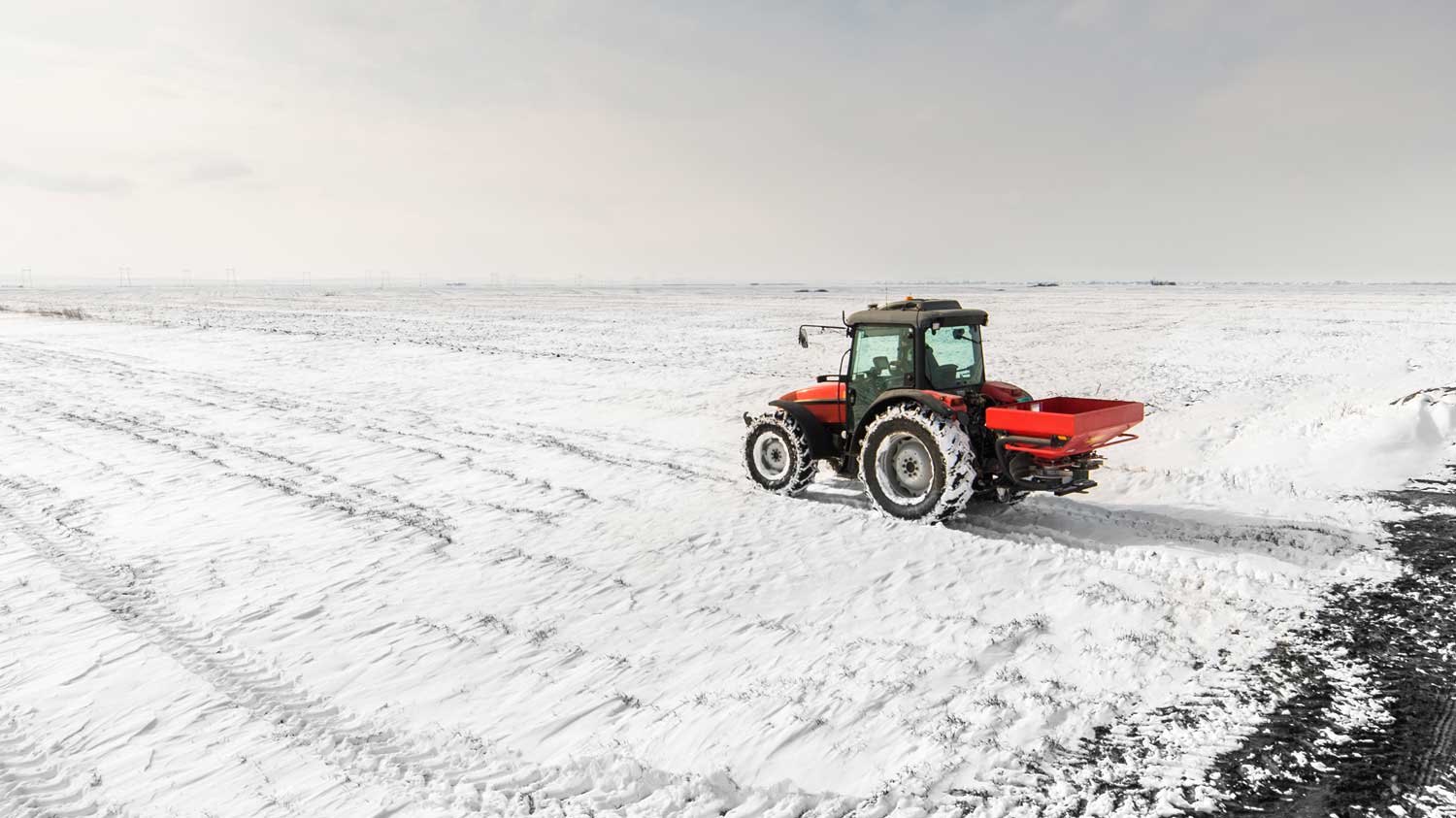
That blanket of snow covering your field is more than a visual change. It’s stored water. And when it thaws, it often moves faster than your system, or your soil, can handle.
The U.S. Geological Survey (USGS) explains that when soils are frozen, infiltration slows or stops entirely. Instead of soaking in, meltwater becomes surface runoff. This can lead to pooling in low-lying areas, slope erosion and sudden pressure on tile systems, especially in fields with poor surface drainage or compacted soils.
From a soil perspective, snowmelt is a seasonal stress test. If the soil is poorly structured or compacted, it won’t absorb water effectively, even after the thaw. And if drainage systems aren’t tied into the natural movement of water through the soil profile, that water will find its own path—often one that causes damage.
The EPA notes that this freeze-then-flood scenario is a common cause of winter and early spring drainage failures. If you’re seeing standing water, ice buildup or saturated zones that should be dry, the problem may not be your pipe, but your soil’s inability to recover from frost.
Now’s the Time to Ask:
- Are your outlets exposed and clear?
- Is snowmelt running off or soaking in?
- Are there signs of erosion, ponding or surface instability?
These are all surface problems, and also signals about how your soil is functioning under pressure.
Use the Off-Season to Get Smarter
Good contractors use winter to learn by walking fields, digging test holes, checking frost depth, checking outlets and just monitoring how the land “feels” underfoot. They can even map problem areas with drones or GPS to revisit in the spring. This is the kind of quiet work that doesn’t show up in a quote—but shows up in the results.
If you want to start simple, try this on your next winter walkthrough:
Winter Walk Checklist:
- Is there any standing water in areas that should be dry?
- Are outlets frozen, buried or blocked?
- Are tile lines draining during a thaw?
- Are there igns of surface erosion or runoff?
- Are previous installation areas stable and level?
It’s not glamorous, but it’s effective. The more you pay attention now, the fewer surprises you’ll face later.
The Ground May Be Frozen, but the Lessons Are Active
At Fratco, we believe drainage isn’t just about pipe. It’s about land, water and time. Winter has a way of teaching the hard truths—the stuff you can’t always see in the moment but feel when things go wrong later. That’s why we encourage our partners to look closer in the off-season. Not because the work is urgent, but because the insight is.
Frost is just the land showing you where it’s vulnerable. Pay attention. The land doesn’t rest. And neither should your understanding of it.